
Literature Digest | Targeting One Digital PCR Helps Study the Association Between Escherichia coli Serotype and Pathotype
Researchers developed a MeltArray high‑multiplex PCR assay for diarrheagenic *E. coli*, identifying five major pathotypes plus 163 O‑antigen and 53 H‑antigen genes directly from stool samples without strain culture. Validated with reference strains, clinical isolates and digital PCR, it delivers high consistency against conventional serology and WGS. Testing of 637 isolates reveals an intrinsic serotype‑pathotype correlation, reaching 97.2% match for O:H serotypes. The 4‑hour workflow supports food‑borne outbreak tracing, clinical diagnosis, surveillance and vaccine research.
Recently, researchers from Xiamen University, the Shenzhen Center for Disease Control and Prevention, and other institutions published an article entitled “Molecular serotyping of diarrheagenic Escherichia coli with a MeltArray assay reveals distinct correlation between serotype and pathotype” in the international academic journal Gut Microbes (IF=12.2). This paper introduces a highly multiplex PCR assay called the MeltArray Escherichia coli serotyping assay, which can simultaneously differentiate five major diarrheagenic Escherichia coli pathotypes and identify 163 O-antigen and 53 H-antigen encoding genes, making it a powerful tool for molecular serotyping of Escherichia coli.
●
Research Background
●
┃Pathogenic Escherichia coli
Diarrhea and foodborne diseases caused by pathogenic Escherichia coli are common and persistent public health problems, and are a major cause of morbidity and mortality among children in developing countries. To effectively control pathogenic Escherichia coli infections, it is crucial to distinguish pathogenic strains from non-pathogenic strains. The serotype and pathotype of Escherichia coli are key indicators for outbreak analysis and epidemiological surveillance
┃Existing Detection Methods
Currently, methods for identifying the pathotypes and serotypes of pathogenic Escherichia coli typically involve three steps: 1. Isolating and identifying Escherichia coli using traditional culture and biochemical methods; 2. Detecting the specific virulence genes of the five pathogenic Escherichia coli types using molecular biology methods; 3. Identifying O antigens and H antigens using serological methods. This approach has several limitations, such as the need to isolate and culture strains, which is time-consuming, and its inability to comprehensively cover all known O antigens and H antigens.
┃Digital PCR Technology
Digital PCR (dPCR), as a novel PCR technology, achieves direct absolute quantification through single-molecule amplification and Poisson distribution statistics. It has strong tolerance to PCR inhibitors, and its results offer higher reproducibility and precision. Compared with qPCR, it does not rely on standard curves for quantification, and has the advantages of absolute quantification and high precision, making it more suitable for quantification and disease assessment. It is a technology with broad application prospects.
●
Research Objectives
●
This study aimed to develop a molecular serotyping assay capable of identifying all known O and H antigens of Escherichia coli, and to explore the association between Escherichia coli serotype and pathotype.
●
Research Methods
●
┃Establishment of the Assay
The researchers established and validated a highly multiplex PCR-based assay, called the MeltArray Escherichia coli serotyping assay, using 229 plasmids containing insert sequences of each target gene and 176 reference strains. These genes included 12 pathogenicity genes targeting the 5 major diarrheagenic Escherichia coli pathotypes; 163 O-antigen encoding genes targeting 182 O serogroups; 53 H-antigen encoding genes targeting 53 H types; and one Escherichia coli-specific gene, yccT.
┃Validation of the Assay
The researchers first used simulated samples to validate the ability of this assay to detect Escherichia coli serotypes directly from stool specimens, and then conducted a retrospective study to explore the application of this assay in detecting foodborne Escherichia coli outbreaks without reliance on culture. Subsequently, the researchers used this assay to test 637 Escherichia coli isolates from multiple provinces to explore the association between serotype and pathotype. The researchers also performed whole-genome sequencing analysis to further verify the relationship between Escherichia coli serotype and pathotype, and to explore the relationship between Escherichia coli serotypes and the four major species of the genus Shigella.
┃The Role of Digital PCR
First, the researchers used the digital PCR method to detect the Escherichia coli-specific gene in order to quantify and serially dilute the simulated samples. Then, in the validation experiments, the researchers used digital PCR to quantify the copy numbers of target genes (including Escherichia coli O-antigen encoding genes, H-antigen encoding genes, and virulence genes) in clinical specimens, and employed a triplex digital PCR for quantitative analysis of the relevant genes in the retrospective study. Finally, digital PCR technology was combined with melting curve analysis technology in this study to determine the precise serotype and pathogenicity of Escherichia coli.
●
Research Results
●
┃Performance of the Assay
The reproducibility analysis showed that the melting temperature coefficient of variation of all target genes was below 0.4%, allowing accurate differentiation of each target gene (see figure below, a). When testing 176 reference Escherichia coli strains, the assay achieved 96% and 100% concordance with traditional serological methods and whole-genome sequencing, respectively. In terms of sensitivity, the limit of detection of this assay was 500 copies per reaction, and the melting peak height (Rm value) of the target genes was proportional to their copy number (from digital PCR results), enabling quantitative analysis (see figure below, b).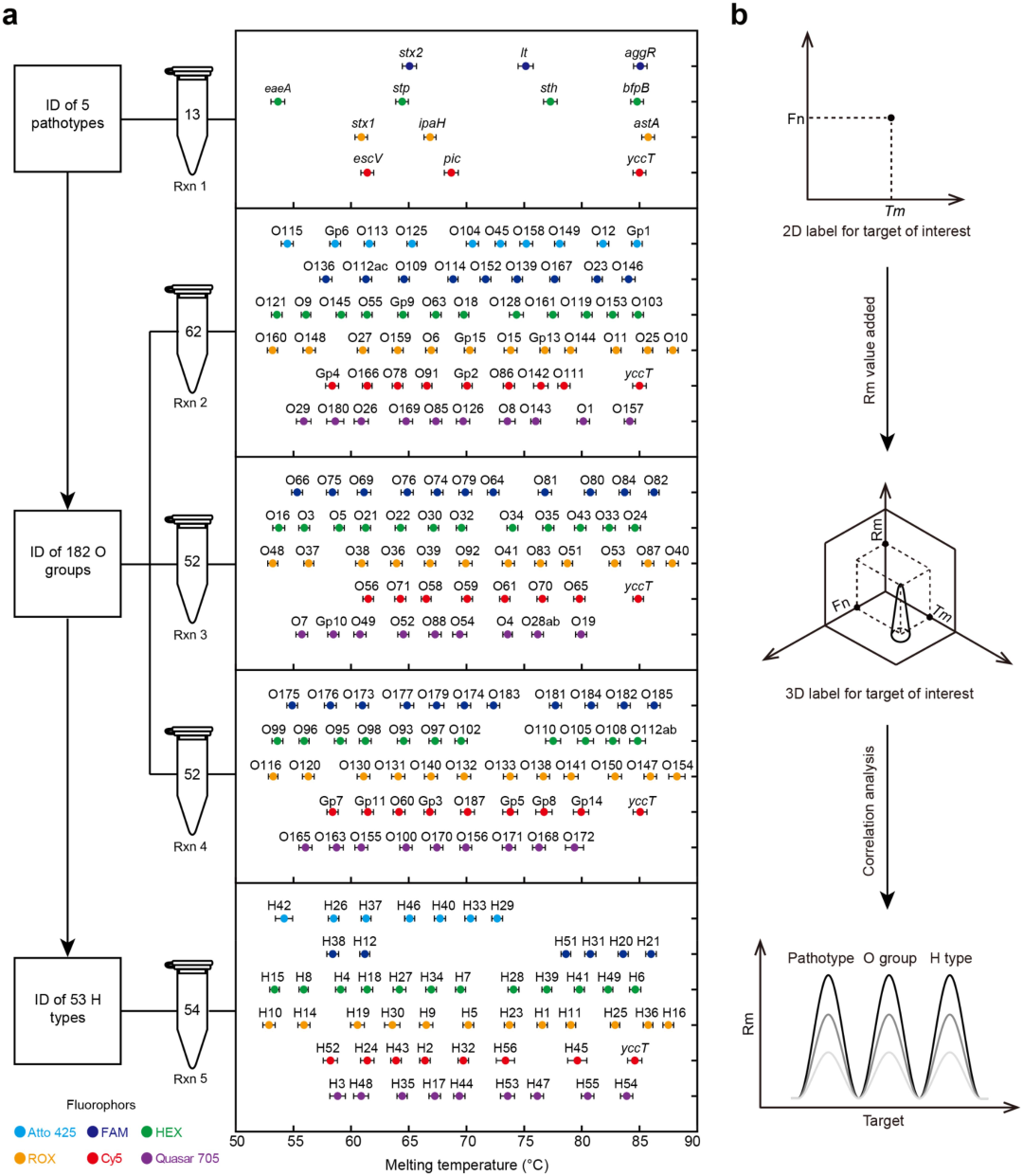
a: Reaction 1 (Rxn1) is a 13-plex PCR targeting 12 virulence genes and one Escherichia coli-specific gene (yccT). Reaction 2 (Rxn2) is a 62-plex PCR targeting 61 O-antigen encoding genes and yccT. Reaction 3 (Rxn3) is a 52-plex PCR targeting 51 O-antigen encoding genes and yccT. Reaction 4 (Rxn4) is a 52-plex PCR targeting 51 O-antigen encoding genes and yccT. Reaction 5 (Rxn4) is a 54-plex PCR targeting 53 H-antigen encoding genes and yccT. In each reaction, target genes are identified according to a 2D label consisting of fluorophore type (Fn) and melting temperature (Tm). Fluorophore types are indicated by the colors of the solid circles, and Tm values are shown as mean Tm ± 3 standard deviations (n=8).
b: The 3D label concept used by the MeltArray assay. The 3D label includes fluorophore type (Fn), melting temperature (Tm), and melting peak height (Rm). By analyzing data across these three dimensions, correlations between target genes can be established, thereby enabling precise identification of pathogenic strains.
┃Retrospective Study of a Food Poisoning Outbreak
In a retrospective study of a food poisoning outbreak, this assay directly detected the O and H serotypes of the pathogenic strain from anal swab specimens, revealing a strong positive correlation among the genes escV, Gp10, and H11, and identifying the strain as enterotoxigenic Escherichia coli Gp10:H11. This result was consistent with the subsequent sequencing validation of the isolated strain. Compared with traditional serotyping methods, the MeltArray Escherichia coli serotyping assay was able to successfully identify the serotype of diarrheagenic Escherichia coli in stool specimens within 4 hours of receiving the anal swab specimens (see figure below).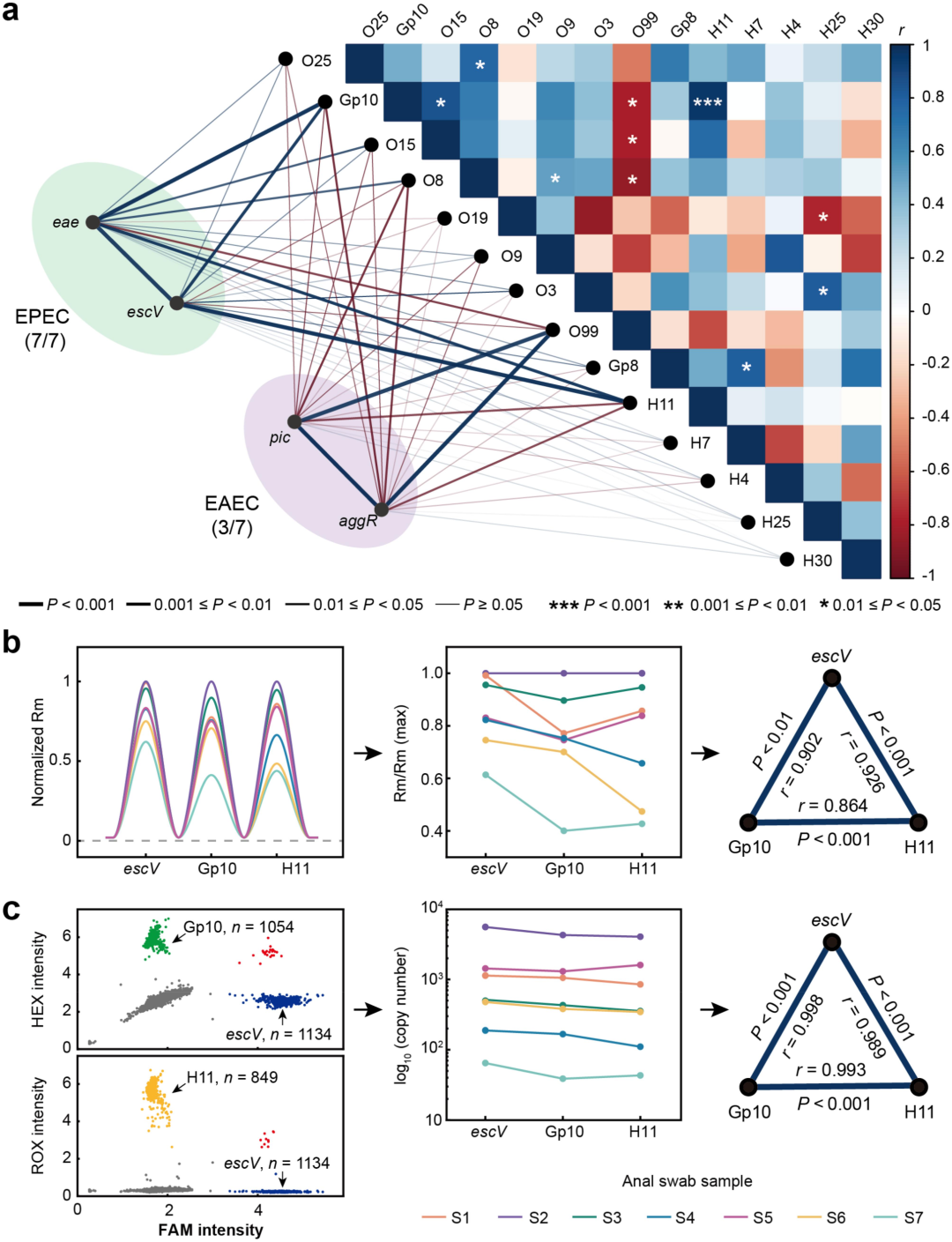
a: Correlation analysis showed a strong positive correlation among the detected genes escV, Gp10, and H11, indicating that these three genes coexisted in the genome of the outbreak strain.
b: The melting peak height (Rm) values of the escV, Gp10, and H11 genes in the 7 specimens varied proportionally across samples, further confirming the direct correlation among these three genes.
C: The digital PCR results also showed that the copy numbers of these three genes were nearly equal in each specimen, with a correlation coefficient as high as 0.989, further validating their coexistence in the genome of the outbreak strain.
┃Detection Results of 637 Clinical Escherichia coli Isolates
The researchers also tested and analyzed 637 isolates from a multi-province study to explore the association between Escherichia coli serotype and pathogenicity. Among these isolates, 93 were classified as non-pathogenic Escherichia coli and excluded, while the remaining 544 isolates covered the serotypes of the 5 major diarrheagenic Escherichia coli pathotypes, and the association between their serotypes and the 5 diarrheagenic Escherichia coli pathotypes was further investigated. The researchers found that almost every serotype corresponded to a single pathotype. Further analysis showed that O serogroups, H serotypes, and O:H serotypes corresponded to pathotypes at rates of 84.5%, 70.5%, and 97.2%, respectively, further confirming that there is an intrinsic association between serotype and diarrheagenic Escherichia coli pathotype (see figure below).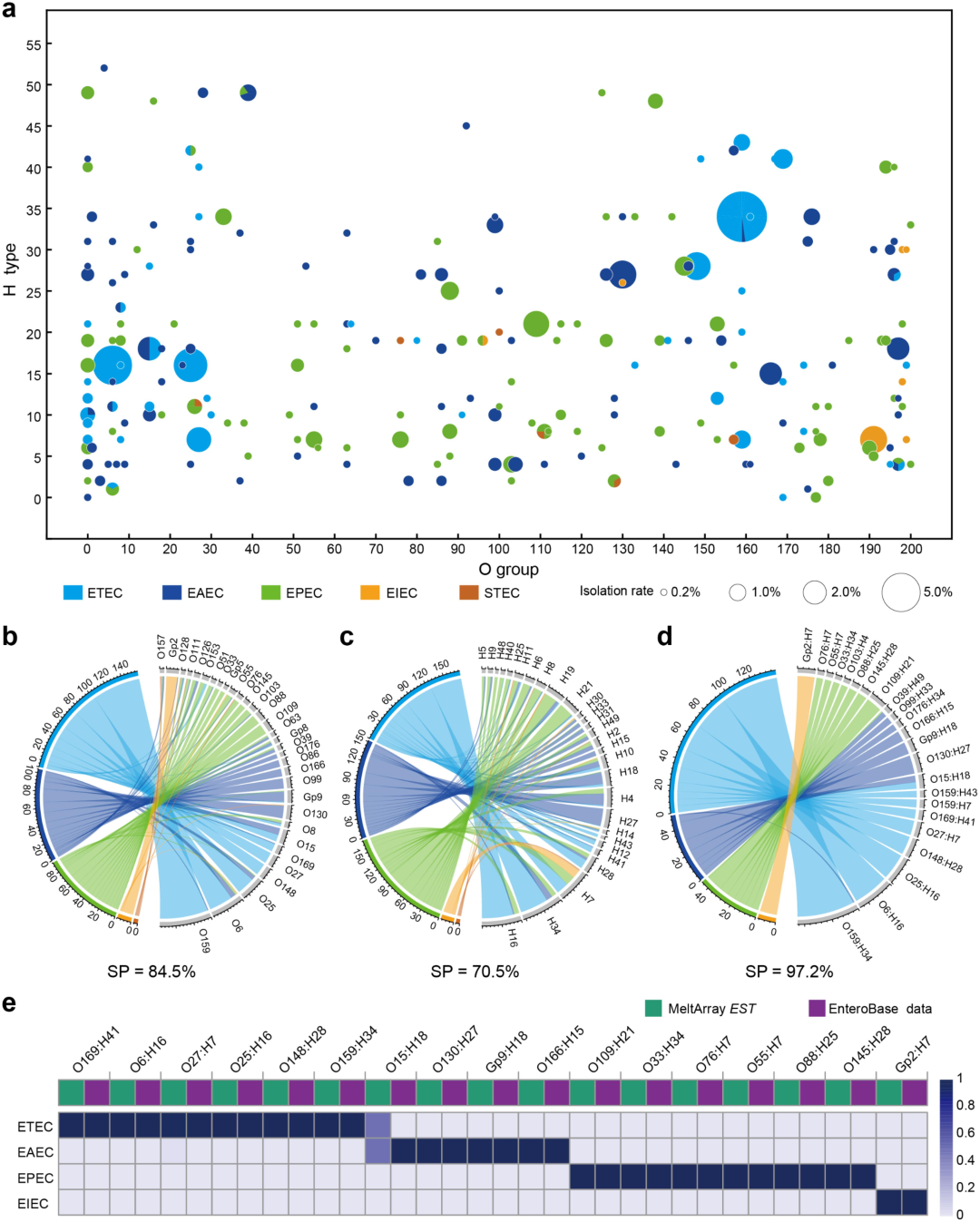
a: Relationship between different Escherichia coli serotypes and pathotypes. Almost every serotype corresponds to a single pathotype, indicating an inherent association between serotype and pathotype.
b-d: Chord diagrams showing the relationships between O antigens, H antigens, and serotypes with the 5 pathotypes.
e: Comparison of the correlation between serotype and pathotype between the results of this study (n=250) and online data analysis results (n=78).
●
Summary and Discussion
●
This study developed a highly multiplex PCR assay capable of simultaneously detecting the 5 major pathotypes of Escherichia coli as well as all known O and H serotypes. This assay can detect Escherichia coli serotypes directly from stool specimens, making it faster and more accurate than traditional serological methods.
The study found that the serotype of Escherichia coli has a distinct association with its pathogenicity, and can serve as a reliable biomarker for diagnosing pathogenic Escherichia coli infections. This assay can also accurately differentiate the genus Shigella from enteroinvasive Escherichia coli (EIEC), compensating for the shortcomings of traditional serological methods.
This study provides an effective molecular typing method for the clinical diagnosis, epidemiological surveillance, and vaccine development of pathogenic Escherichia coli. Moreover, by comparison with digital PCR, the researchers found that the melting peak height (Rm value) of target genes is proportional to their copy number; therefore, this assay can also be used for quantitative analysis of pathogenic Escherichia coli.
Link to the original article: https://doi.org/10.1080/19490976.2024.2401944